Blocked drains are not always caused by hair. Grease, wipes, outdoor debris and damaged pipes can also restrict wastewater flow.
A blocked drain can be caused by something as small as a wad of hair or as serious as damaged underground pipework. This checklist covers common problems across sinks, showers, toilets and outdoor drains, with practical steps to help prevent them.
Kitchen and bathroom blockages
- Fat, oil and grease. Cooking fat can cool and accumulate inside pipework. Let it cool and put it in the appropriate household waste rather than washing it down the sink.
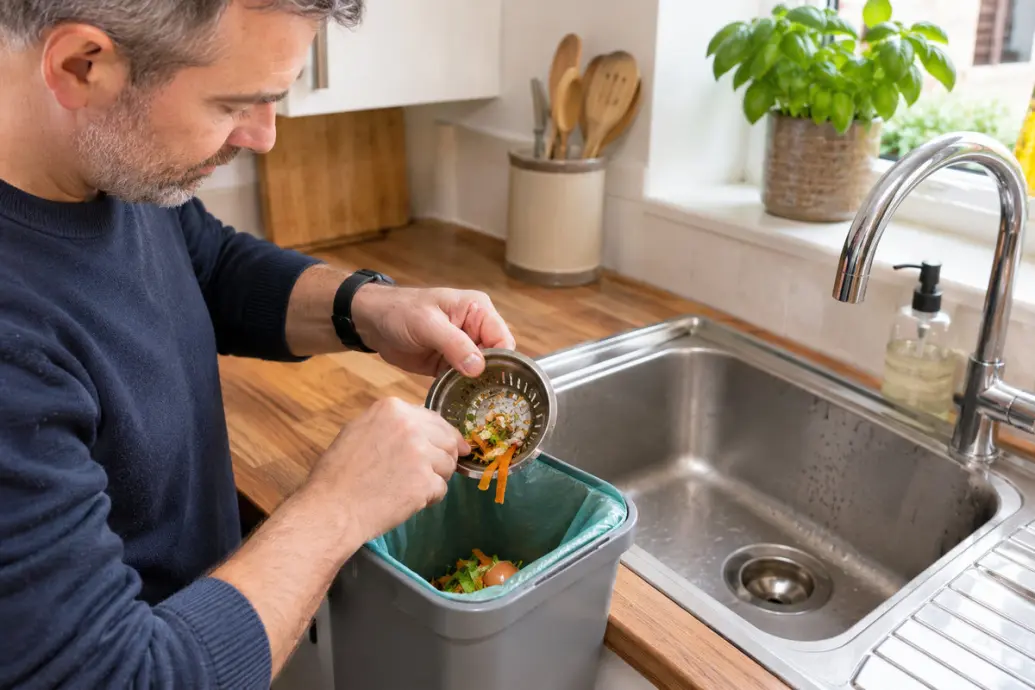
- Food scraps. Rice, pasta, vegetable peelings and other scraps can collect in the trap. Scrape plates into the bin and use a sink strainer.
- Hair. Hair catches on fittings and combines with soap residue. Clean a removable shower or basin strainer regularly.
- Soap residue. Soap and minerals may gradually coat waste fittings. Clean accessible plugholes and strainers rather than trying to prevent every issue with strong chemicals.
- Toothpaste and cosmetic residue. Thick residue can trap hair and debris. Wipe away excess product rather than rinsing large amounts down the basin.
- Cotton wool and pads. These do not break down like toilet paper. Put them in the bin.
- Small foreign objects. Jewellery, toys and other items can lodge in a trap. Fit appropriate strainers and retrieve visible objects without forcing them deeper.
- Building debris. Plaster, grout and cement residue can harden in pipework. Never dispose of building materials through a sink or drain.
Toilet and soil-pipe blockages
- Wet wipes. Even products marketed as flushable can contribute to blockages. Put wipes in the bin.
- Sanitary products. Pads and tampons can swell or snag. Dispose of them in a suitable bin.
- Paper towels and tissues. These generally do not disperse like toilet paper. Do not flush them.
- Too much toilet paper at once. Large amounts can obstruct a toilet, especially when existing drainage is restricted.
Outdoor and underlying drainage problems
- Leaves, soil and garden debris. Clear accessible gully grates and collect leaves before they wash into drains.
- Tree roots. Roots can enter cracked or defective underground pipes. A CCTV drain inspection may be needed to confirm the cause.
- Damaged or poorly aligned pipes. Cracks, displaced joints and poor falls can repeatedly trap waste. Cleaning alone may not provide a lasting solution.
What if the drain keeps blocking?
Repeated blockages, gurgling at several fixtures, wastewater backing up or persistent outdoor flooding suggest a problem beyond the visible plughole. Avoid repeated chemical treatments, especially where the cause is unknown. A drainage specialist may recommend testing or a CCTV survey before any repair.
For a local sink blockage, see our safe sink-unblocking guide. If the problem is deeper, HandyExperts can arrange appropriate drainage services. Call 0330 912 2323 to discuss the symptoms.
< Blog list



 0330 912 2323