
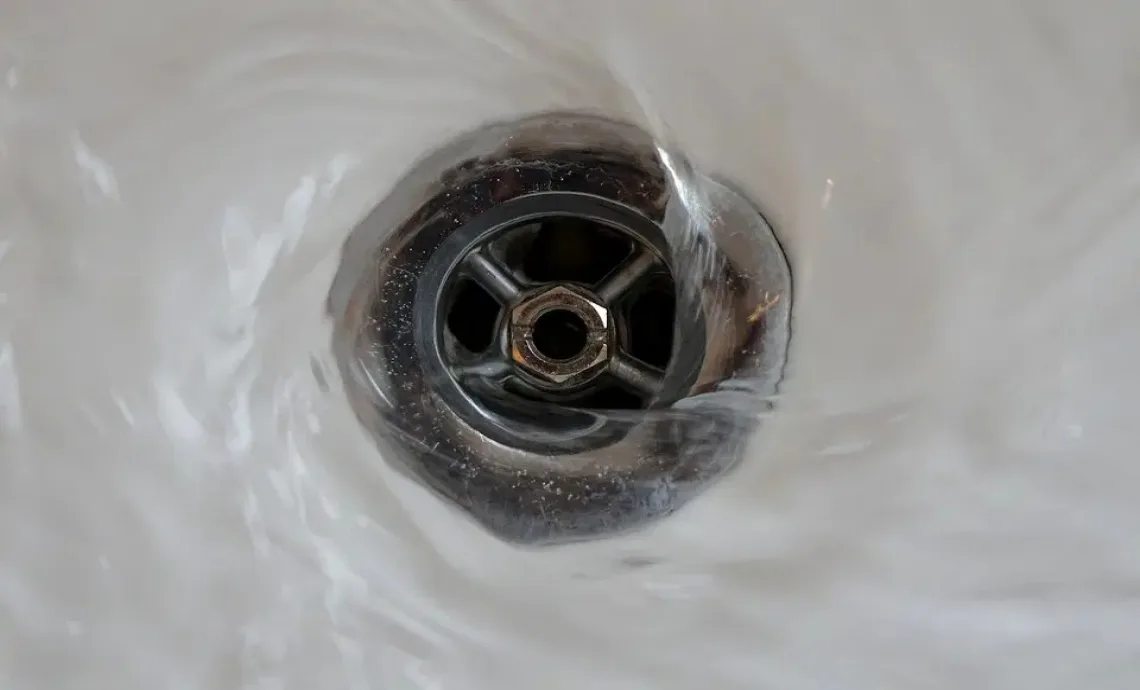
Standing water and slow drainage often start with debris near the plughole or in the trap. Try safer checks before reaching for chemicals.
A slow-draining sink is often caused by hair, soap residue or food waste collecting around the plughole or in the waste pipe. Some minor blockages can be cleared with simple mechanical methods, but it is important to know when to stop.
Has anyone poured a chemical drain cleaner, bleach, acid or another cleaning product into the sink? If so, do not add anything else, use a plunger or open the waste trap. Splashing or mixing chemicals can cause serious injury. Follow the product label and tell any plumber what has been used.
If no drain chemicals have been used, check whether the sink has obvious damage or a leak. Put a bowl or towel nearby to catch spills and wear suitable gloves for handling waste.
Remove accessible food scraps, hair or other material from the strainer or removable plug according to its design. Do not force fittings or push debris further down. Clean the removable parts before refitting them.
A sink plunger can dislodge some local blockages. With a little water around the plunger cup, form a seal over the plughole. If the sink has an overflow, seal it temporarily while plunging. Use steady movements rather than excessive force, and stop if joints begin to leak.
Never plunge a sink that contains chemical drain cleaner.
On a straightforward, accessible plastic waste trap, a competent person may be able to remove trapped debris after checking the fittings and placing a bucket underneath. Follow the manufacturer's arrangement, protect sealing washers and reassemble without overtightening.
Run a little water afterwards and inspect every joint for leaks. If the pipework is unfamiliar, damaged, difficult to access or has been exposed to drain chemicals, do not dismantle it; arrange professional help.
There is no reliable universal recipe for clearing a blockage. Avoid pouring boiling water into an installation that may not tolerate it. Do not rely on baking soda, vinegar or soda crystals to remove a solid obstruction, and do not mix cleaning products.
Chemical drain cleaners can be corrosive. If you decide to use one, read and follow the exact manufacturer's instructions, including the stated amount and contact time. Never leave it longer than directed or add another product, and do not routinely use drain cleaners as maintenance.
Get help if the water will not drain, several outlets are affected, wastewater backs up or the blockage keeps returning. Those signs may point to a problem further along the pipework. A plumber can check the trap and waste connections; a deeper drainage blockage may require drainage specialists.
For help with a blocked sink, call HandyExperts on 0330 912 2323 and explain what you have already tried, especially if any chemical product has been used.
< Blog listUse the form to request your callback and we'll come back to you straight away.

Put your contact details into the form along with anything you'd like to share with us about the job.

Our office experts will check the details and call you back with prices and availability.

If it sounds good and you like your trade services hassle-free & fully managed then we're ready to book you in!


 0330 912 2323